Users
Social media
- More details here...
- Address
Parc Científic de la Universitat de València C/
Catedrático Agustín Escardino, 9
46980 Paterna (Valencia) Spain - Email:
iu.i2sysbio@uv.es - Phone:
(+34) 963544810
- Address
Links


Users
Social media
Parc Científic de la Universitat de València C/
Catedrático Agustín Escardino, 9
46980 Paterna (Valencia) Spain
(+34) 963544810
Links

Educaction
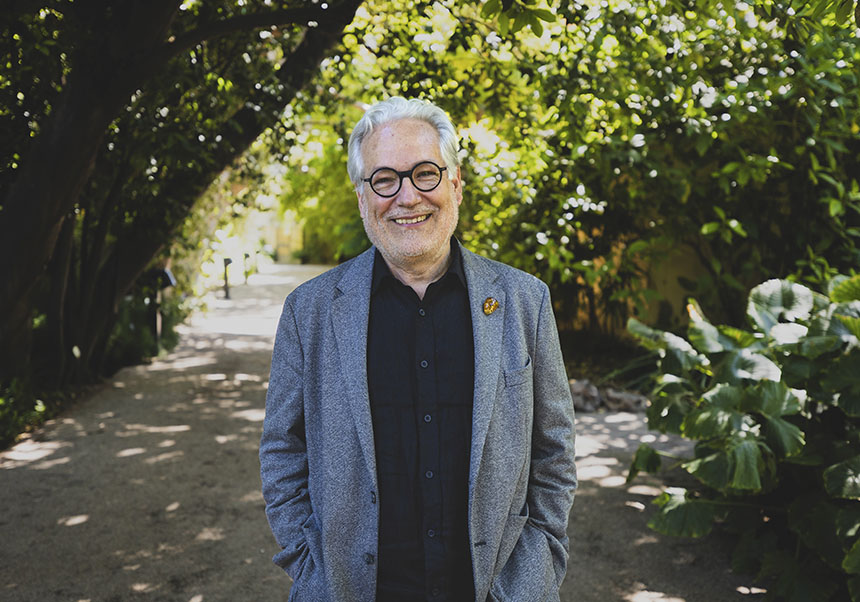
Juli Peretó, a researcher at I2SysBio (UV-CSIC), has been appointed a corresponding member of the Royal Academy of Sciences and Arts of Barcelona (RACAB). The Academy, founded in 1764 as a literary society and now dedicated to the study of science and its applications, recognises Peretó’s research work in the field of evolutionary biochemistry.
The Royal Academy of Sciences and Arts of Barcelona aims to act as a promoting and disseminating body and a point of reference for the sciences and applied arts in the fields of culture and society. This appointment recognises the scientific contributions of Juli Peretó, who has a long career as a lecturer and researcher, with a particular interest in the origin and evolution of life, as well as in the history of ideas about the natural origin of life and its artificial synthesis. On these topics, he has published both scientific articles and popular science texts. He is a researcher at the Institute of Integrative Systems Biology (I2SysBio), of which he was the first co-director, and a professor (chair) of biochemistry and molecular biology at the University of Valencia.
Peretó is also a full member of the Biological Sciences Section of the Institut d’Estudis Catalans (IEC). He has served as secretary and vice-president of the International Society for the Study of the Origin of Life (ISSOL), which appointed him a Fellow in 2014. He was a founding partner of the University of Valencia spin-off Darwin Bioprospecting Excellence SL. He was Vice-Rector for Research and Culture during the celebrations marking the fifth centenary of the founding of the University of Valencia. He also played a leading role in the creation of the Chair of Science Communication, the precursor to the current Unit for Scientific Culture and Innovation, as well as the Estudi General science communication award.
His latest book is An evolutionary story of agency: How life evolved to act on its own (Springer, 2025), co-authored with the philosopher Álvaro Moreno. In 2027, the publisher ARPA will release the Spanish-language version of the popular science book Un planeta creatiu: com va començar la vida a la Terra i com la fabricarem en el laboratori (Institució Alfons el Magnànim, 2023). Together with Jaume Bertranpetit, he co-edited the collective work Illuminating human evolution: 150 years after Darwin (Springer, 2022). Furthermore, his passion for gastronomy has led him to undertake new projects aimed at popularising science through cooking. In this regard, he has edited La ciència a taula, a collection of Fernando Sapiña’s articles on scientific gastronomy published by the journal Mètode (Monografies Mètode, 2019). These are just a few examples of his extensive career.
Corresponding members of the RACAB are those who reside outside the Barcelona metropolitan area. Their duties include participating in corporate activities and conferences, and collaborating in research and the dissemination of the sciences and the arts. Notable figures within this category of members include the astronaut and aeronautical engineer Pedro Duque and the chemist Avelino Corma.
About the Royal Academy of Sciences and Arts of Barcelona
The RACAB is based in Barcelona. It has been working to promote scientific and technological knowledge for over two and a half centuries. The Academy has achieved numerous milestones. In 1891, it established the official time service for the city of Barcelona, at a time when it was very difficult to obtain the exact time, as this depended on local astronomical observations. And in 1923, it hosted a lecture by Albert Einstein entitled ‘On the Theory of Relativity’. These are just two examples of the institution’s most notable historical events.
The Fabra Observatory forms part of its heritage; it has operated continuously since it was inaugurated in 1904 as an astronomical, meteorological and seismic observatory, with the aim of providing a deeper understanding of how natural forces interact. The Academy’s heritage is further enriched by its library, archives, collection of clocks, and its astronomical, meteorological, seismological and horological instruments, as well as the Fontmartina seismological station in Montseny (Barcelona).