Users
Social media
- More details here...
- Address
Parc Científic de la Universitat de València C/
Catedrático Agustín Escardino, 9
46980 Paterna (Valencia) Spain - Email:
iu.i2sysbio@uv.es - Phone:
(+34) 963544810
- Address
Links


Users
Social media
Parc Científic de la Universitat de València C/
Catedrático Agustín Escardino, 9
46980 Paterna (Valencia) Spain
(+34) 963544810
Links

Investigation
• The Institute of Integrative Systems Biology is participating in one of the projects funded by the European Innovation Council to develop innovative, high-risk technologies
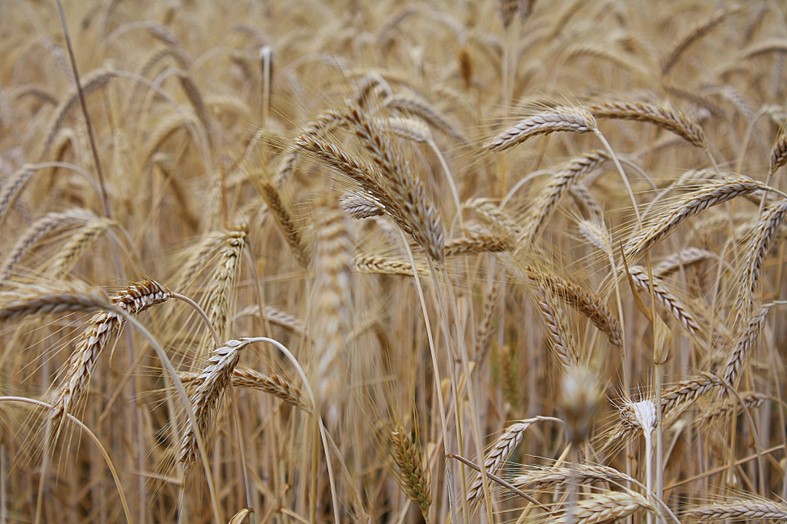
• The project combines plant biology, microbiology, artificial intelligence, genetic improvement and the design of biofertilisers to improve wheat, one of the most important staple foods for humanity
The Institute of Integrative Systems Biology (I2SysBio), a joint centre of the Spanish National Research Council (CSIC) and the University of Valencia, is participating in one of the Pathfinder Challenges projects funded by the European Innovation Council (EIC), the results of which were announced today. Specifically, the project involving the I2SysBio research group led by CSIC researcher Ana Conesa will harness a natural plant communication system based on extracellular vesicles to create new tools to improve wheat’s resilience to drought and nutrient deficiency.
The EIC Pathfinder Challenges are funding calls focused on developing radically innovative, high-risk technologies in specific thematic areas identified as challenges by the European Commission. They aim to transform laboratory research into future market leaders by funding projects led by multidisciplinary teams tackling global challenges.
A natural system for drought-resistant wheat
The project led by Ana Conesa at I2SysBio will harness a natural plant communication system based on extracellular vesicles—tiny particles that roots release into the soil to interact with the surrounding microorganisms. “By analysing the molecules contained in these vesicles and how they influence the soil microbiome, we will develop new tools to improve wheat’s resilience to drought and nutrient deficiency, combining plant biology, microbiology, artificial intelligence, advanced genetic improvement and the design of smart bio-based fertilisers,” explains Conesa.
According to the CSIC researcher, this initiative is important because it addresses some of the major challenges currently facing agriculture: the loss of productivity due to climate change, soil degradation and dependence on polluting chemical fertilisers. “We propose a shift in approach, moving away from input-intensive practices towards a form of agriculture that harnesses plants’ own natural mechanisms, which would enable food to be produced in a more sustainable, resilient and environmentally friendly way, in line with European strategies for ecological transition and food security,” she notes.