
Users
Social media
- More details here...
- Address
Parc Científic de la Universitat de València C/
Catedrático Agustín Escardino, 9
46980 Paterna (Valencia) Spain - Email:
iu.i2sysbio@uv.es - Phone:
(+34) 963544810
- Address
Links


Users
Social media
Parc Científic de la Universitat de València C/
Catedrático Agustín Escardino, 9
46980 Paterna (Valencia) Spain
(+34) 963544810
Links

Investigation
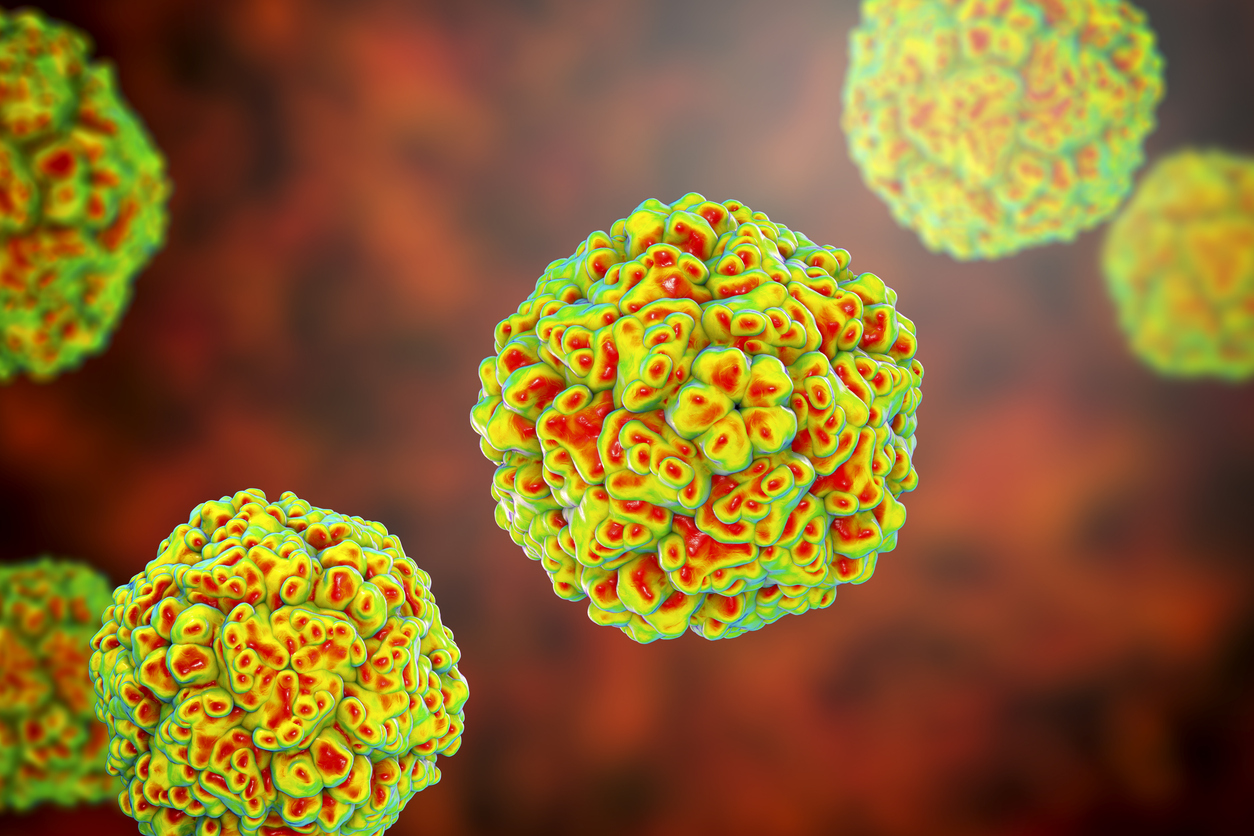
An international study led by the Institute of Integrative Systems Biology (I2SysBio, CSIC-UV) and the National Institute of Allergy and Infectious Diseases (NIAID) in the United States has identified weaknesses shared by different enteroviruses. The study, published in Nature Ecology & Evolution, reveals a stable “core” in two enteroviruses (Enterovirus A71 and Coxsackievirus B3) and a region with hardly any variation in the 2C protein, which is key to the replication of several of these pathogens responsible for millions of infections each year. The results position these regions as future therapeutic targets for the development of broad-spectrum antivirals.
Enteroviruses constitute a large family of pathogens responsible for viral infections in humans that can cause anything from mild colds to diseases such as meningitis, paralysis, or heart inflammation. Despite their impact, the development of vaccines and antivirals is hampered by their extraordinary ability to mutate and their diverse mechanisms of interaction with cells.
The research team has mapped more than 80,000 mutations, with unprecedented resolution, to analyse how mutations affect the functioning of two human enteroviruses of great health relevance: Enterovirus A71 (EVA71), which causes various neurological diseases such as encephalitis and meningitis; and Coxsackievirus B3 (CVB3), which can cause pancreatitis or myocarditis. ‘This mapping was carried out using an ultra-fast genetic screening method known as deep mutational scanning, which allows the effect of tens of thousands of different mutations to be evaluated simultaneously,’ explains Beatriz Álvarez, a researcher at I2SysBio and author of the article.
The results have made it possible to identify which regions of the virus are universal, essential and invariable, and which change depending on the type of virus—whether EVA71, which affects the brain, or CVB3, which is key in cardiac complications—and their adaptive strategy to deceive the host's immune system. This finding is fundamental to understanding the basic selective pressures these viruses face within cells, which determine which variants evolve to replicate successfully. This knowledge allows the design of new antivirals targeted at those stable areas that block the virus's ability to evade through mutations, thus preventing the development of drug resistance.
On the other hand, ‘discovering the regions that change throughout viral evolution allows us to understand how new functions arise in viruses and how interactions with hosts develop over time,’ adds Álvarez.
Vulnerable regions of viruses
Based on the study of more than 80,000 mutations, this research reveals that both EVA71 and CVB3 share a stable “core” that includes the fundamental pieces that allow the virus to replicate and assemble its capsid, the protein capsule that envelops and protects the virus's genetic material. These parts are barely tolerant of change and turn out to be ideal weak points: ‘If they are attacked with an antiviral, it is very difficult for the virus to escape through mutations without losing its ability to infect,’ explains Ron Geller, one of the study's lead authors and head of the Viral Biology group at I2SysBio.
In contrast, the areas that vary most between the two viruses studied are those they use to interact with cells, such as the regions on the outside of the capsid that bind to different cell receptors. These differences explain why each enterovirus infects different tissues or causes diseases of varying severity. Furthermore, identifying regions that change throughout the evolutionary history of viruses allows us to understand how new viral functions arise and how interactions between viruses and hosts develop over time.
New pocket in the 2C protein
Another notable finding of the study is the identification of a new structural pocket in the 2C protein, a key region for virus replication. This is a cavity on its surface that is thought to interact with other molecules, facilitating the development of drugs capable of fitting into this space to alter the structure of the protein and thus nullify its biological function.
‘This highly conserved region is very promising as an antiviral target, as it is present and conserved not only in the two viruses analysed, but also in other viruses of the same family,’ explains the I2SysBio researcher. As it is an area that is resistant to change, an antiviral drug targeting this region would have great potential to work against many enteroviruses at once and, at the same time, a low probability of generating resistance.
In summary, the study provides a detailed map of the vulnerable regions of enteroviruses and those that vary depending on the type of virus. "These findings open up new research opportunities: on the one hand, the identification of a potential therapeutic target allows the application of virtual screening approaches in silico (computer simulations) to discover compounds capable of blocking these viruses, which is particularly relevant given that there are currently no effective antivirals. On the other hand, it offers the possibility of studying how very similar viruses can evolve to use different cellular factors during their replication, providing valuable information on both viral biology and host biology," concludes Geller.
Beatriz Álvarez-Rodríguez, William Bakhache, Lauren McCormick, Ron Geller, Patrick, T. Dolan. Comparative Analysis of Deep Mutational Scanning Datasets in Enteroviruses A and B Identifies Functional Divergence and Therapeutic Targets. Nature Ecology & Evolution. DOI: doi.org/10.1038/s41559-026-02993-8