
Users
Social media
- More details here...
- Address
Parc Científic de la Universitat de València C/
Catedrático Agustín Escardino, 9
46980 Paterna (Valencia) Spain - Email:
iu.i2sysbio@uv.es - Phone:
(+34) 963544810
- Address
Links


Users
Social media
Parc Científic de la Universitat de València C/
Catedrático Agustín Escardino, 9
46980 Paterna (Valencia) Spain
(+34) 963544810
Links

Investigation
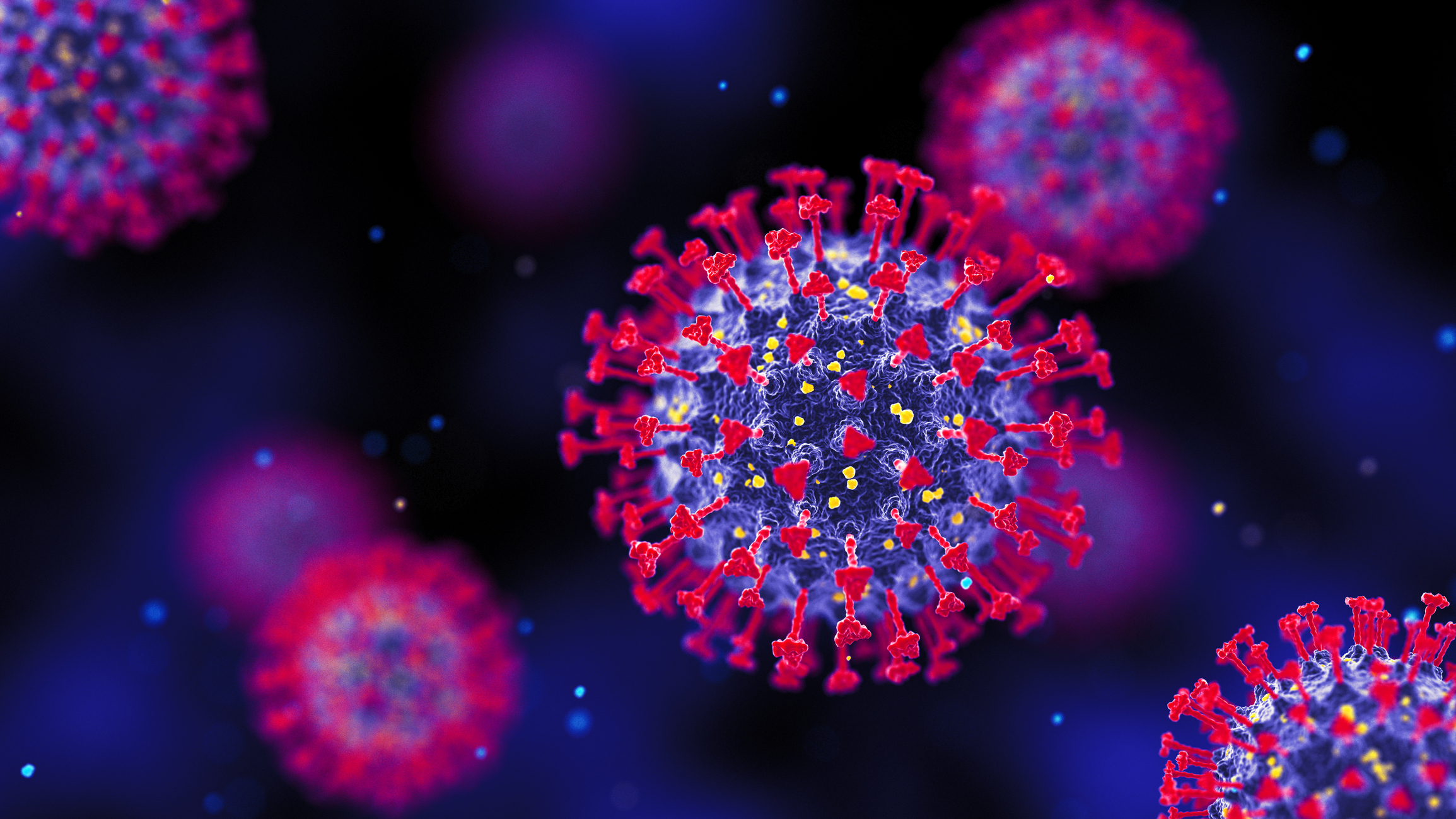
Research conducted by the University of Valencia and the Spanish National Research Council (CSIC) has revealed that a previously little-studied region of the SARS-CoV-2 spike protein is crucial for the virus to enter human cells. The study, published in Communications Biology, shows that the so-called transmembrane domain is not merely an ‘anchor’ attaching the protein to the viral membrane, as previously believed. This piece is active and plays a key role in the infection process.
The spike protein acts as the key the coronavirus uses to recognize and fuse with human cells. “Understanding every cog in the coronavirus machinery is essential if we want to be prepared for future variants or even other similar viruses,” says Luis Martínez Gil, principal investigator and coordinator of the study, and professor in the Department of Biochemistry and Molecular Biology at the University of Valencia.
The work was carried out by the Membrane Protein Laboratory (directed by Ismael Mingarro) at the Faculty of Biological Sciences — University Institute of Biotechnology and Biomedicine (Biotecmed) at the University of Valencia, in collaboration with researchers from the Institute of Integrative Systems Biology (I2SysBio, a joint UV-CSIC centre).
Since the beginning of the pandemic, the external parts of the coronavirus have been analysed in detail, but the role of its final section, which crosses the viral membrane, had not been clarified. ‘Our results show that the sequence and structure of this region are critical: small changes are enough for the virus to lose much of its ability to infect,’ explains Juan Ortiz Mateu (Biotecmed), first author of the paper.
Furthermore, the research has concluded that this region shows few alterations in the different variants of the coronavirus. Therefore, it reinforces the idea that this transmembrane domain of the Spike protein is not a region that only inserts the protein into the membrane, but is an important element that modulates interactions on which infectious efficiency depends.
During the scientific exploration, the researchers introduced mutations at specific sites in the proteins and observed a reduction in the effectiveness with which the virus was able to enter cells. It has also been revealed that the transmembrane domain helps the spike protein form trimers, the structure necessary for the correct fusion of the virus to the cell.
The authors argue that this research, in addition to providing a better understanding of how the virus acts and develops shifts the focus toward developing new drugs and treatments targeting this region of the protein. In other words, it opens the door to exploring new therapeutic approaches previously unstudied, since the transmembrane domain could be used to intervene and block the Spike protein, thereby slowing down the infection.
The research has been funded by several public programmes, within the projects of the Ministry of Science, Innovation and Universities, the State Research Agency and the European Union. It has also been funded by the Prometeo research project of the Valencian Regional Government.